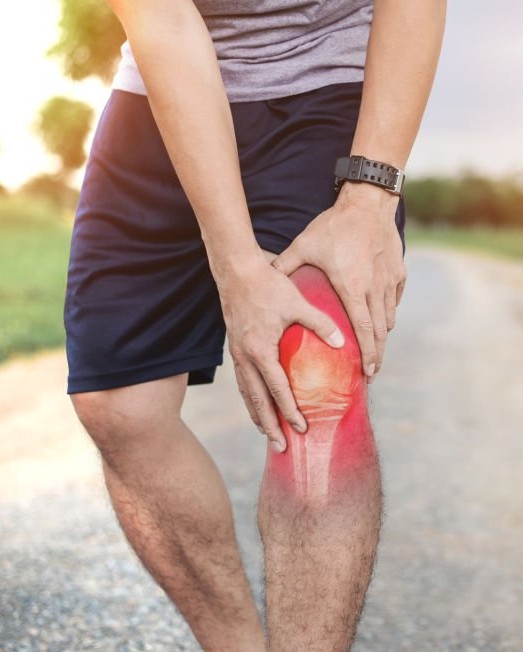
A scan showing an ACL tear doesn't automatically mean you need surgery right away. Dr. Rushikesh Abhyankar explains why the right next step after a knee injury is usually a trial of rehabilitation — not an immediate decision about the operating room.
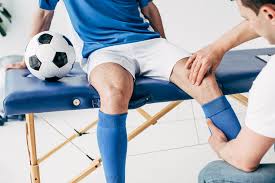
Aditya, 22, twisted his knee during a football match, heard a distinct "pop," and watched it swell up within hours. Unable to wait, he got an MRI done within a week of the injury. The report read: complete tear of the anterior cruciate ligament (ACL). Convinced he needed surgery immediately, he arrived at the OPD asking to be operated on that week. The conversation that followed wasn't about the scan being wrong — it was about what a report like that should, and shouldn't, decide on its own.
An MRI report calling out an ACL tear — partial or complete — is a description of the ligament's structure at that moment. It is not, by itself, a treatment plan. Two patients with an identical-looking scan can need completely different approaches depending on their age, activity level, the sport they play, and — most importantly — how the knee actually performs once the initial pain and swelling settle and rehabilitation begins.
For partial ACL tears, the evidence clearly favours giving conservative treatment a genuine trial first. Surveys of orthopaedic surgeons show the large majority choose non-operative management as the first step for partial tears, and structured rehabilitation — focused on strengthening the quadriceps and hamstrings, along with balance and proprioception training — restores good functional stability in many patients without ever needing an operation. Younger athletes returning to high-demand, pivoting sports are the group most likely to eventually need surgery if instability persists, but even for them, rehabilitation is usually the sensible starting point, not a step to skip past.
A complete ACL tear is a more serious finding, but it's still rarely an emergency operation. In fact, outcomes tend to be better when the knee's swelling has settled and full range of motion has been restored through physiotherapy before any reconstruction — a phase we call "prehab." The decision to proceed with surgery is best based on whether the knee remains functionally unstable — giving way during daily activities, or failing strength and stability testing — after a proper course of rehabilitation, not on the report alone.
Reconstruction surgery cannot be undone. Going straight from an early scan report to the operating table skips the chance to see how the knee actually responds to rehabilitation — a trial that costs little and keeps every option open. Patients who commit to surgery immediately, out of anxiety over a report, sometimes bypass a recovery path that would have served them just as well without an operation.
This isn't a case for waiting when waiting isn't safe. Certain findings do need prompt attention regardless of when or what a scan shows.
This isn't an argument against surgery — it's an argument against rushing into it. Patients with a confirmed complete tear and persistent, functional instability after a genuine course of rehabilitation — especially young, active patients who want to return to pivoting or contact sports — do benefit from ACL reconstruction. That decision is best made together, over a few weeks, based on how the knee is actually performing, not in the same week as the injury.
Aditya's knee was rested and braced, and he began physiotherapy focused on regaining strength and range of motion. Over the following weeks, his knee proved stable through activity, with no episodes of giving way. He returned to football without surgery. If you've had a twisting knee injury, our orthopaedic specialists at Purva Hospital can examine you properly and talk you through what your scan does — and doesn't — mean for your treatment.
This article is for general educational purposes and is not a substitute for personalized medical advice. If you have experienced a knee injury, please consult an orthopaedic specialist for a proper evaluation.
Patient names used in this article have been changed and are fictional. Any resemblance to actual persons, living or dead, is purely coincidental. Cases are presented for educational purposes only.

Dr. Rushikesh Abhyankar is an orthopaedic surgeon specialising in knee replacement, arthroscopy, spine care and trauma care. He is fellowship-trained in robotic-assisted knee replacement and a published researcher in PubMed-indexed journals.
View Full Profile →Book a consultation with Dr. Rushikesh Abhyankar — walk-ins also welcome.