A 42-year-old school teacher was told her X-ray showed a bone spur in her heel and feared she'd need surgery. Dr. Rushikesh Abhyankar explains what was actually causing her pain — and how it resolved without one.
Vaishali, 42, teaches at a school in Kolhapur — on her feet for most of the school day. Over the summer break, she took up brisk morning walks to lose weight. A few weeks in, she began noticing a sharp, stabbing pain in her right heel the moment she got out of bed each morning. It would ease after a few minutes of walking, only to return by the end of a long day standing in the classroom. She assumed it was "just some strain" and pushed through it for over a month before finally coming in.
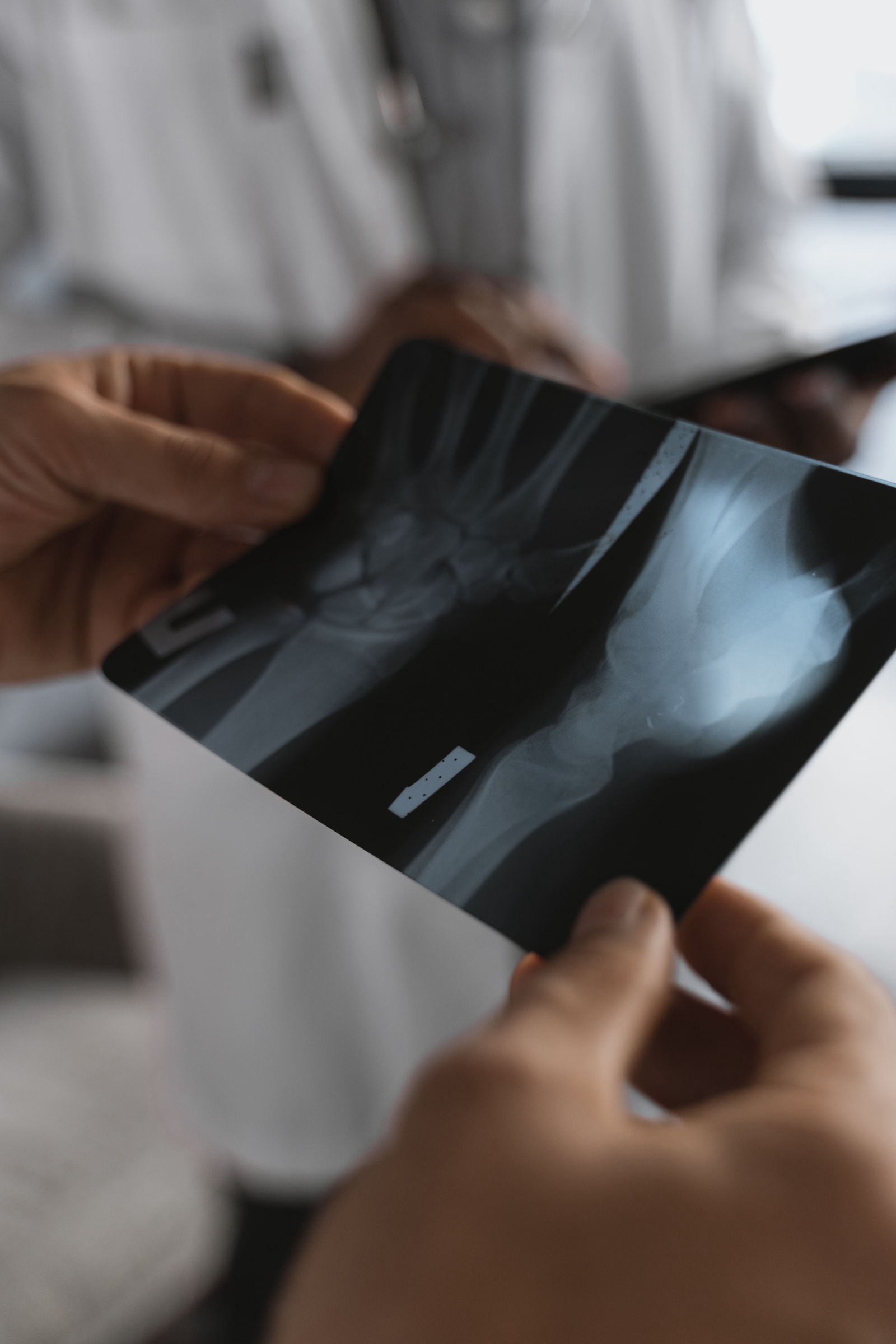
On examination, pressing the inner part of her heel reproduced her exact pain. We ordered an X-ray to rule out a stress fracture — and it showed a small bony spur jutting from her heel bone. Vaishali was alarmed. "Will I need surgery to remove it, doctor?" The honest answer surprised her: the spur was not her problem at all.
The plantar fascia is a thick, fibrous band of tissue that runs along the bottom of your foot, connecting the heel bone to the toes and supporting the arch. Plantar fasciitis occurs when this band becomes irritated and inflamed — usually from repeated small tears caused by excess strain — making it the most common cause of heel pain we see in the OPD.
It's especially common in people who are suddenly more active than usual — like Vaishali, who went from a sedentary summer to daily brisk walks almost overnight.
Plantar fasciitis has a pattern that's hard to miss:
Plantar fasciitis develops when the fascia is placed under more strain than it can comfortably handle:
A heel spur is a small calcium deposit that forms gradually where the fascia attaches to the heel bone, due to years of chronic traction. Here's the key fact: nearly half of people with a heel spur on X-ray have no heel pain at all, and many people with plantar fasciitis have no spur visible on imaging. The spur is a marker of long-standing strain — not the source of pain. The pain comes from inflammation in the soft-tissue fascia itself. This is why treatment is directed at the fascia, not the bone, and why "removing the spur" is almost never the answer.
We started Vaishali on a conservative, fascia-focused treatment plan — no injections, no procedures, just consistent daily habits.
Stand facing a wall, place the affected leg behind you with the heel flat on the floor, and lean forward gently. Hold for 30 seconds, repeat 3 times.
Before getting out of bed, use a towel looped around your toes to gently pull them toward you, stretching the sole. Do this first thing every morning.
Roll the sole of your foot over a frozen water bottle for 10–15 minutes. This combines ice therapy with a gentle massage of the fascia.
Worn overnight, this keeps the fascia gently stretched while you sleep — preventing it from tightening up again, which is what causes that sharp first-step pain each morning.
About 9 in 10 patients improve significantly with the measures above, usually within a matter of weeks to a few months. For the small number of cases that remain resistant — typically after 6 months or more of consistent conservative treatment — other options include:
Vaishali stayed consistent with her morning stretches, wore the night splint, and switched to supportive footwear both at school and at home. By the sixth week, her first-step pain had noticeably reduced. By the third month, it was gone entirely — and she never needed an injection, let alone a discussion about her heel spur again.
Consistency mattered far more than intensity. Skipping the morning stretch for even a few days often meant the first-step pain crept back — a pattern we see in almost every patient who recovers well.
Do not delay if you notice any of the following:
Plantar fasciitis is one of the most treatable causes of heel pain — and, in the vast majority of cases, one of the least dramatic. Vaishali's story is a reminder that an alarming-looking X-ray finding isn't always the real diagnosis; a careful clinical examination often tells the fuller story.
If you or someone you know in Kolhapur is dealing with persistent heel or foot pain, our orthopaedic team at Purva Hospital can help you get back on your feet without unnecessary procedures.
This article is for general educational purposes and is not a substitute for personalised medical advice. If you are experiencing heel or foot pain, please consult an orthopaedic specialist for a proper evaluation.
Patient names used in this article have been changed and are fictional. Any resemblance to actual persons, living or dead, is purely coincidental. Cases are presented for educational purposes only.

Dr. Rushikesh Abhyankar is an orthopaedic surgeon specialising in knee replacement, arthroscopy, spine care and trauma care. He is fellowship-trained in robotic-assisted knee replacement and a published researcher in PubMed-indexed journals.
View Full Profile →Book a consultation with Dr. Rushikesh Abhyankar — accurate diagnosis, and a treatment plan that starts with what actually works.