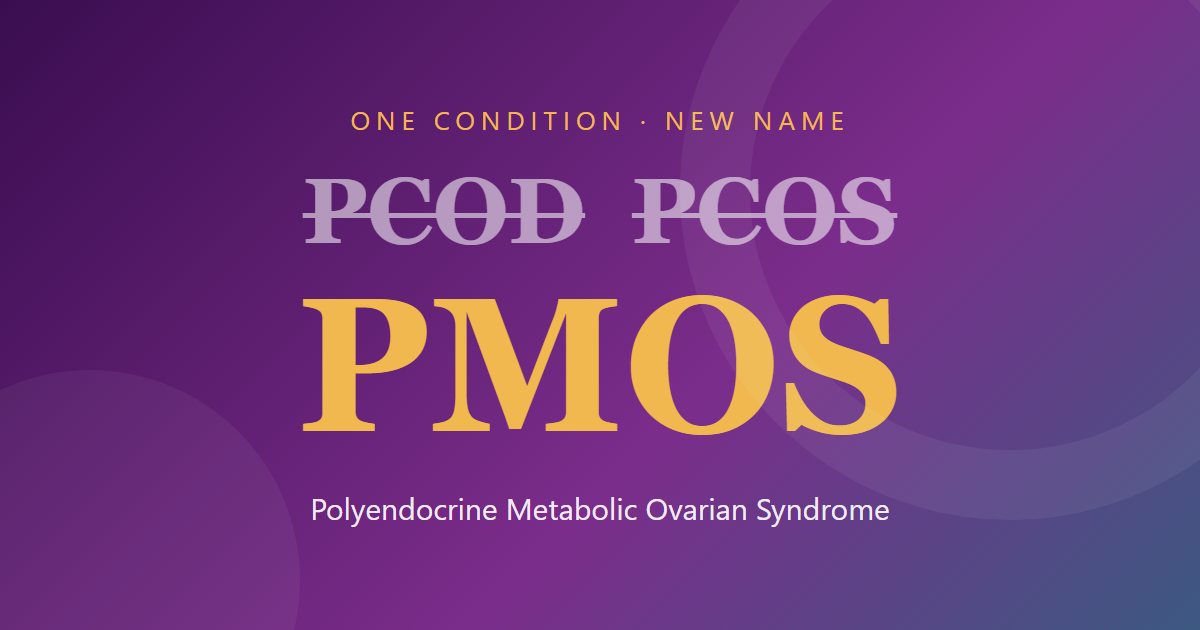
PCOD and PCOS are the same condition — and in 2026 both were formally renamed PMOS by a global medical consensus. Dr. Tanvi Hirekerur-Abhyankar explains what changed, why, and what it means for your treatment.
Seema, 20, sat down in the consultation chair and immediately said, “Madam, I have PCOD.” I was a little thrown — it took me a moment to even register what she meant! I said, tell me what's actually bothering you — I'm the doctor, shouldn't I be the one making the diagnosis? Poor Seema looked flustered. “Doctor, this is discussed so much among friends these days. Several girls in our group have been told they have this ‘PCOD.’” That's when it clicked — she meant PCOD, Polycystic Ovarian Disease. Today, let's actually understand what it means — and why, in 2026, this condition was formally renamed worldwide.
Let's clear up a common confusion first: PCOD (Polycystic Ovarian Disease) and PCOS (Polycystic Ovary Syndrome) are not two different problems — they are two different names for the exact same condition. In India, “PCOD” is the more commonly used term, while international medical literature has favoured “PCOS.” Both names refer to the same underlying condition.
The name suggests “poly” means many and “cystic” means fluid-filled sacs. The ovaries normally contain small clusters of cells (follicles) that mature each month and release an egg. In this condition, that process doesn't complete — the follicles remain immature and accumulate in the ovary instead. On ultrasound, these small immature follicles look like tiny “cysts,” which is where the name came from.
However, international research has now clarified that these are not truly pathological cysts at all — they are simply follicles that failed to mature. This means the word “polycystic” itself is medically misleading, and it's the root of the naming confusion around this condition.
In May 2026, leading medical bodies worldwide — 56 patient organisations and health professional societies, involving more than 14,360 patients and doctors globally — completed a landmark global consensus process, published in The Lancet, one of the world's most respected medical journals. This process formally retired both older names, PCOD and PCOS, in favour of a new, more accurate name: Polyendocrine Metabolic Ovarian Syndrome — or PMOS.
This new name explicitly captures three dimensions — confirming that this has never been just an “ovary problem”:
Multiple hormone systems are disrupted at once — insulin, androgens (male-type hormones like testosterone), brain (neuroendocrine) hormones, and ovarian hormones — not just one.
Obesity, diabetes, high blood pressure, raised cholesterol, fatty liver, and elevated heart disease risk are all a core part of this condition — not just “side effects.”
Ovarian dysfunction, irregular periods, and fertility difficulty remain real and important — but they are only one part of the full picture.
A three-year global transition period has been set for adoption of this new name, with full integration into the International Guideline (used across 195 countries) expected by 2028. So for the next few years, you'll likely see all three names — PCOD, PCOS, and PMOS — used interchangeably. Just remember: they all refer to the same condition.
This condition affects an estimated 170 million women worldwide, and as many as 70% remain undiagnosed. In India too, its prevalence has risen sharply — today it affects nearly 20% of young women, compared to just 3–4% fifteen to twenty years ago. There is no strict age limit either: it can occur at any age between the start and end of a woman's reproductive years. Research shows that nearly 85% of affected women have insulin resistance — including 75% of women who are lean, not overweight.
The gap between periods increases — sometimes stretching to three to six months. The amount of bleeding also changes: some women bleed very lightly for just 1–2 days, while others bleed heavily for 12–15 days.
Hair begins growing in male-pattern areas — above the lip, on the chin, and below the navel — because the ovaries start producing excess testosterone, the hormone typically dominant in men.
Today's sedentary lifestyle is a major contributor — changed eating habits, increased outside food and junk food, excessive mobile and computer use, and lack of exercise all lead to weight gain. As body fat increases, hormonal balance is further disrupted. A BMI above 25 is considered a risk factor, and PCOD is one of the conditions it can invite.
Acne increases noticeably, skin becomes very oily, and scalp hair may start thinning or falling out, sometimes leading to patches of hair loss.
Dark, thickened patches of skin (acanthosis nigricans) can appear, typically around the neck, armpits, or other skin folds — this is linked to insulin resistance.
This is one of the most significant effects: the monthly egg that should mature and release often fails to do so, making conception difficult for many women with this condition.
PCOD isn't limited to the reproductive system — nearly 28 different symptoms can appear across the body. Genetics plays a significant role, and obesity — particularly increased waist circumference — is a major contributing factor.
In PCOD, the ovaries produce excess amounts of male-type hormones, particularly testosterone. This disrupts the normal hormonal signaling from the brain, causing certain hormone levels to rise and affect the ovaries directly — so eggs cannot mature and release properly. Excess body fat itself also increases male hormone production, which is what drives unwanted hair growth. And because PCOD's effects reach beyond fertility and periods alone, it also raises the risk of diabetes and high blood pressure over time.
Under the current International Guideline (used across 195 countries), adult women (aged 20 and above) are diagnosed when at least two of the following are present — after ruling out other conditions: (1) irregular or absent ovulation, (2) clinical or blood-test evidence of excess male-type hormones (hyperandrogenism), and (3) either polycystic-appearing ovaries on ultrasound, or an elevated AMH (Anti-Müllerian Hormone) blood level. For adolescents (aged 10–19), only the first two criteria are required.
Since irregular periods, infertility, and excess hair growth can also occur in other conditions — such as thyroid disorders, adrenal tumours, or Turner Syndrome — these are considered and ruled out through testing. The following blood tests are typically done first:
Thyroid hormone levels
Prolactin levels
Testosterone levels
Blood sugar levels and insulin resistance
Follicle Stimulating Hormone (FSH)
Luteinizing Hormone (LH)
Lipid profile
AMH (Anti-Müllerian Hormone) — when needed
The patient's Body Mass Index (BMI) is also calculated, which helps with diagnosis. This is followed by an ultrasound scan, which checks the number and position of immature follicles in the ovaries. In some patients — particularly where ultrasound isn't conclusive — the AMH blood test serves as an equally reliable alternative to ultrasound.
Women with PMOS face significantly elevated cardiovascular risk — research shows an overall cardiovascular disease risk nearly 1.7 times higher, heart attack risk 2.5 times higher, and stroke risk nearly 1.7 times higher than women without the condition. This is driven largely by insulin resistance, obesity, and chronic low-grade inflammation — none of which are limited to periods or fertility. This is exactly why managing PMOS needs to go beyond “regulating periods” alone, and give equal attention to long-term heart and metabolic health.
The most important thing to understand is that PCOD largely results from irregularities in daily diet and lifestyle. This means a regular, disciplined routine is one of the most powerful tools available — and if you are overweight, focusing on weight reduction should be the priority, which requires consistent exercise.
The single best exercise is brisk walking — at least 40 to 45 minutes daily. Regularity and pace both matter. Adding jogging or running is even better if possible. For those who can manage a gym routine, that works too, ideally learning proper form from a trainer and exercising under supervision.
Aerobics is increasingly popular among young women. Yoga is especially valuable — it builds physical flexibility while also supporting mental balance, which helps keep hormone levels in check. Surya Namaskar in particular is highly beneficial, and pranayama (breathing exercises) is also very useful for hormonal control.
Those who are significantly overweight should extend their exercise duration to burn more calories and support weight loss. As weight decreases, insulin levels drop, androgen levels fall, and egg maturation improves. Exercise and diet work hand in hand — reducing calorie intake matters just as much. It's common to over-indulge in a favourite food, which contributes directly to weight gain.
Starchy foods should be significantly reduced. Include pulses, lentils, leafy vegetables, and eggs in your diet. Avoid oily, spicy, and excessive non-vegetarian food. Fast food today is consumed far too often, and it's typically high in starch and fat — which directly drives weight gain, raising BMI and triggering or worsening PCOD. If your lifestyle is largely sedentary, make a conscious effort to move — take a 5–10 minute break every hour to get up and walk around.
Along with PCOD itself, related conditions such as diabetes, high blood pressure, certain heart conditions, obesity, and raised cholesterol also need to be actively managed. A healthy lifestyle, a well-balanced diet, and regular exercise — as described above — remain the foundation of managing all of these together.
If medication, exercise, and diet do not achieve the expected results, a surgical option may be considered. This involves laparoscopically draining the small fluid-filled cysts from the ovaries — a procedure known as “ovarian drilling.” However, opinion on this procedure is quite divided, and it is generally avoided as a routine option today.
Whatever the name — PCOD, PCOS, or PMOS — it's the same underlying condition, and its exact root cause is still not fully understood, so research continues actively. What we do know is this: a healthy lifestyle, regular exercise, and a balanced diet can prevent it altogether in many cases, or bring it firmly under control in those who already have it.
If irregular periods, unwanted hair growth, or difficulty conceiving are affecting your life in Kolhapur, our gynaecology team at Purva Hospital can help confirm the diagnosis and guide you through the right treatment — starting with the lifestyle changes that matter most.
This article is for general educational and awareness purposes only and is not a substitute for personalised medical advice. If you suspect you have PCOD/PCOS/PMOS, please consult a gynaecologist. The naming information in this article is based on the global consensus report published in The Lancet (May 2026).
Patient names used in this article have been changed and are fictional. Any resemblance to actual persons, living or dead, is purely coincidental. Cases are presented for educational purposes only.
Dr. Tanvi Hirekerur-Abhyankar is a gynaecologist and obstetrician at Purva Hospital, Kolhapur. She has a particular interest in high-risk pregnancies, adolescent gynaecology, and women's health through all stages of life.
View Full Profile → Women's Health
Causes of abnormal bleeding at every age, the tests needed, and treatments from medicines to Mirena and surgery — explained by Dr. Bharati.
 Women's Health
Your periods used to come on time — now they're late or have stopped. Dr. Tanvi explains the 13 possible causes and what to do next.
 Women's Health
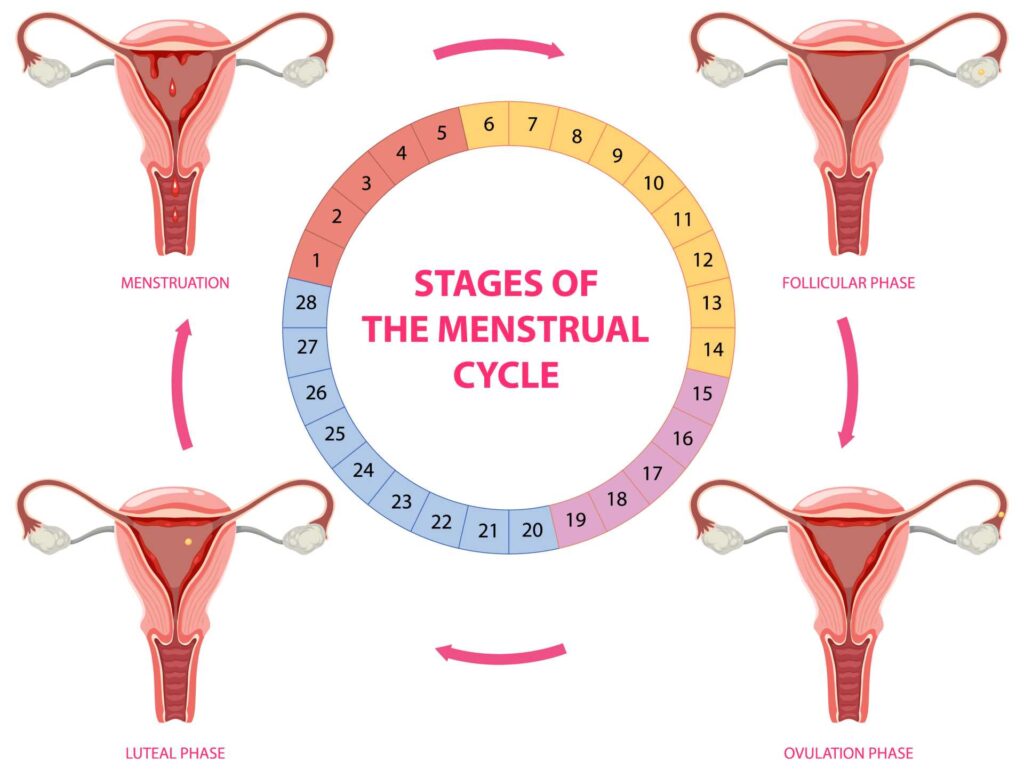
The three phases of the cycle, plus common problems like irregular periods, heavy bleeding & cramps — a guide by Dr. Bharati.
Speak with Dr. Tanvi — a clear diagnosis and a plan that starts with the lifestyle changes that matter most.